
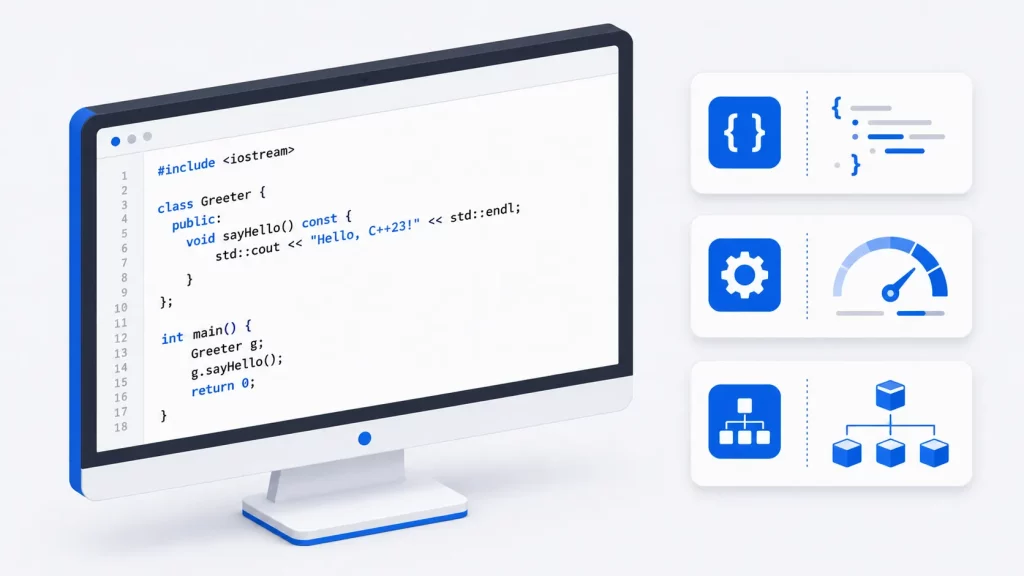
C++ Programming: Complete Beginner’s Guide to Modern C++ (2026)
Learn modern C++ from scratch — variables, loops, classes, STL and C++11–C++26 features — with practical examples and a clear roadmap for beginners.
Learn modern C++ from scratch — variables, loops, classes, STL and C++11–C++26 features — with practical examples and a clear roadmap for beginners.
In JavaScript, we use braces {} for creating an empty object and brackets [] for creating an empty array. I find the Developer console in Mozilla Firefox or Google Chrome more convenient to print out any object and study the details.
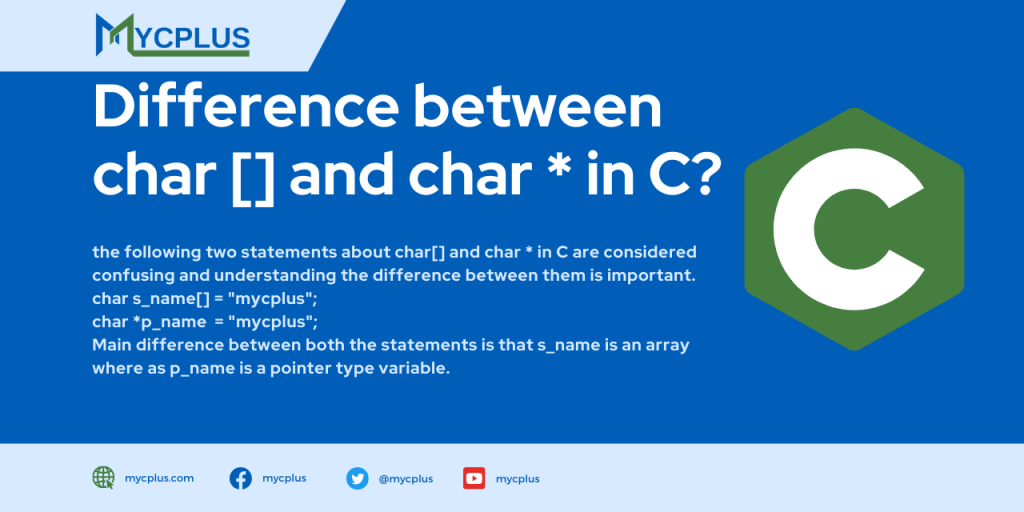
Generally, the following two statements about char[] and char * in C are considered confusing and understanding the difference between them is important. The first statement puts the literal string “mycplus” in read-only memory and copies the string to newly allocated memory on the stack. The second statement is known as static string allocation and definition.

As discussed in our previous post, C and C++ programmers have access to two main types of data structures: built-in
A pointer is a variable that represents the location of a data item, such as a variable or an array element. Pointers are used frequently in C, as they have a number of useful applications. For example, pointers can be used to pass information back and forth between a function and its reference point. Pointers provide a way to return multiple data items from a function via function arguments to
be specified as arguments to a given function.
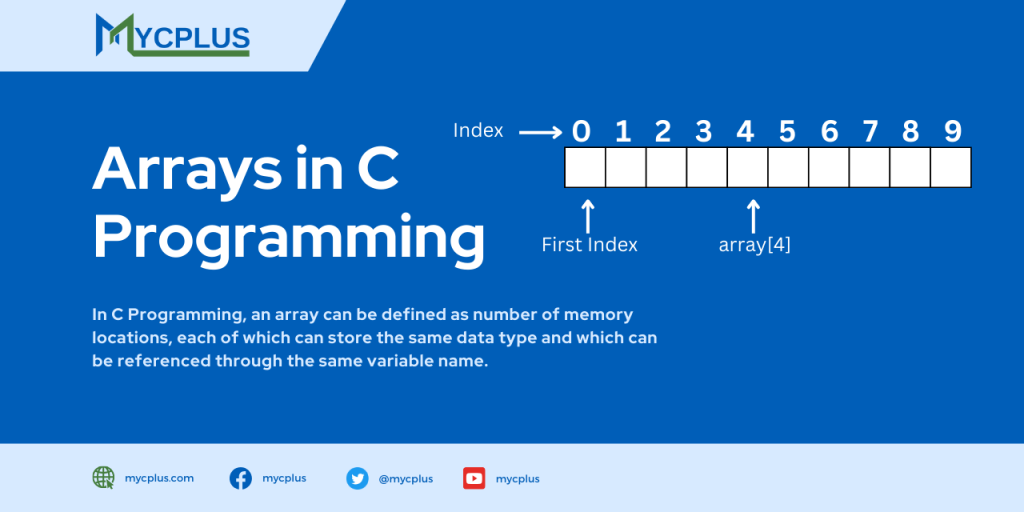
In C Programming, an array can be defined as number of memory locations, each of which can store the same data type and which can be referenced through the same variable name. Arrays can be of two types i.e. One Dimensional Array (such as lists) and Multidimensional Arrays (such as tables or matrices).
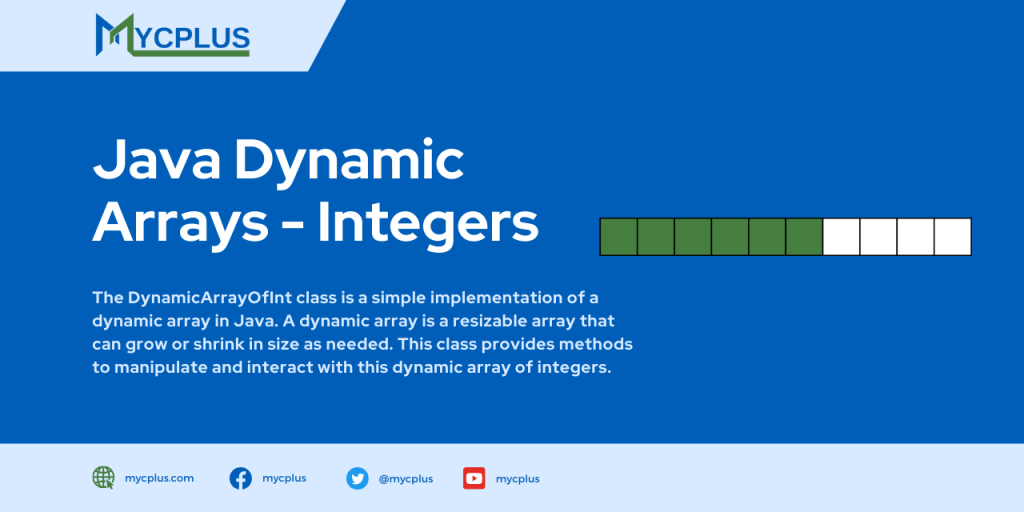
The DynamicArrayOfInt class is a simple implementation of a dynamic array in Java. A dynamic array is a resizable array that can grow or shrink in size as needed. This class provides methods to manipulate and interact with this dynamic array of integers. In the constructor, initially the data array has a size of 1 and grows as necessary.
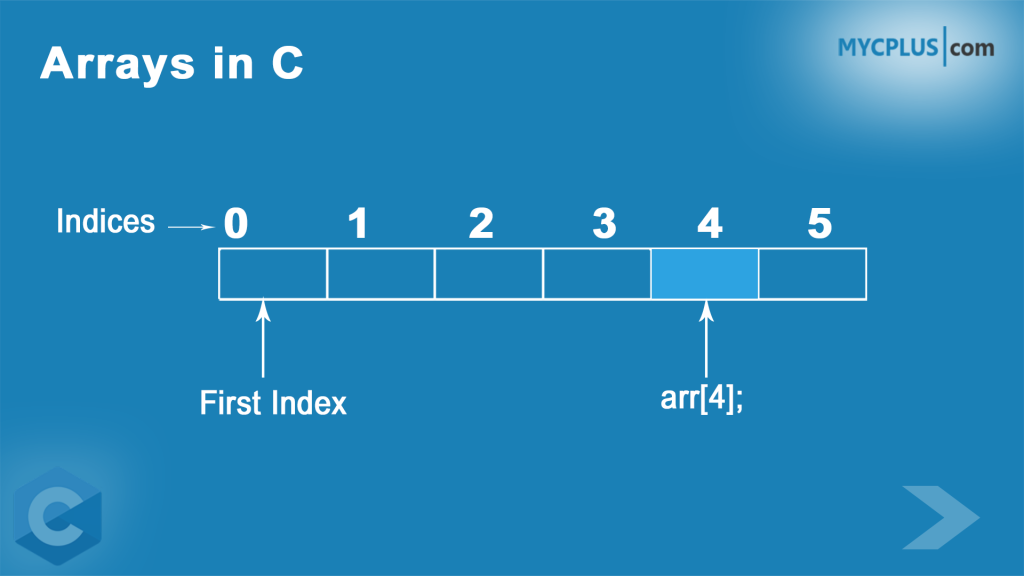
This C program shows insertion in Arrays. It shows how to insert an element in an array at any point. This program also shows how to print the updated array after the item is inserted in the array.
This C code multiplies two 2×2 matrices. It prompts the user to input values for both matrices, displays the input matrices, performs matrix multiplication using nested loops, and then prints the resulting matrix. The code adheres to modern C standards, using printf and scanf for I/O and avoiding outdated functions for better readability and compatibility.
In C, an array can be initialized using aggregates, which are a collection of values enclosed in braces ({}) and separated by commas. Another way to initialize array by using a loop which allows you to set the initial values of an array using a more flexible and dynamic approach. The basic idea is to use a loop to assign values to each element of the array based on some condition or calculation.
This C program compares two distinct arrays and if the arrays are same then content results in FALSE. The behavior of comparison is explained when we note that the comparison is a comparison of addresses, not contents.
This program serves as a practical example for beginners to understand array manipulation, function usage, and basic input/output operations in the C programming language. It also introduces concepts like function prototypes and error handling.